top of page
ford 6.7 cab off.jpg

Common Ford Power Stroke Problems We Fix

Power Stroke diesel engines are known for power and durability — but they also have specific failure points.


Here are the most common Power Stroke engine repairs we perform at Westco Automotive & Truck:

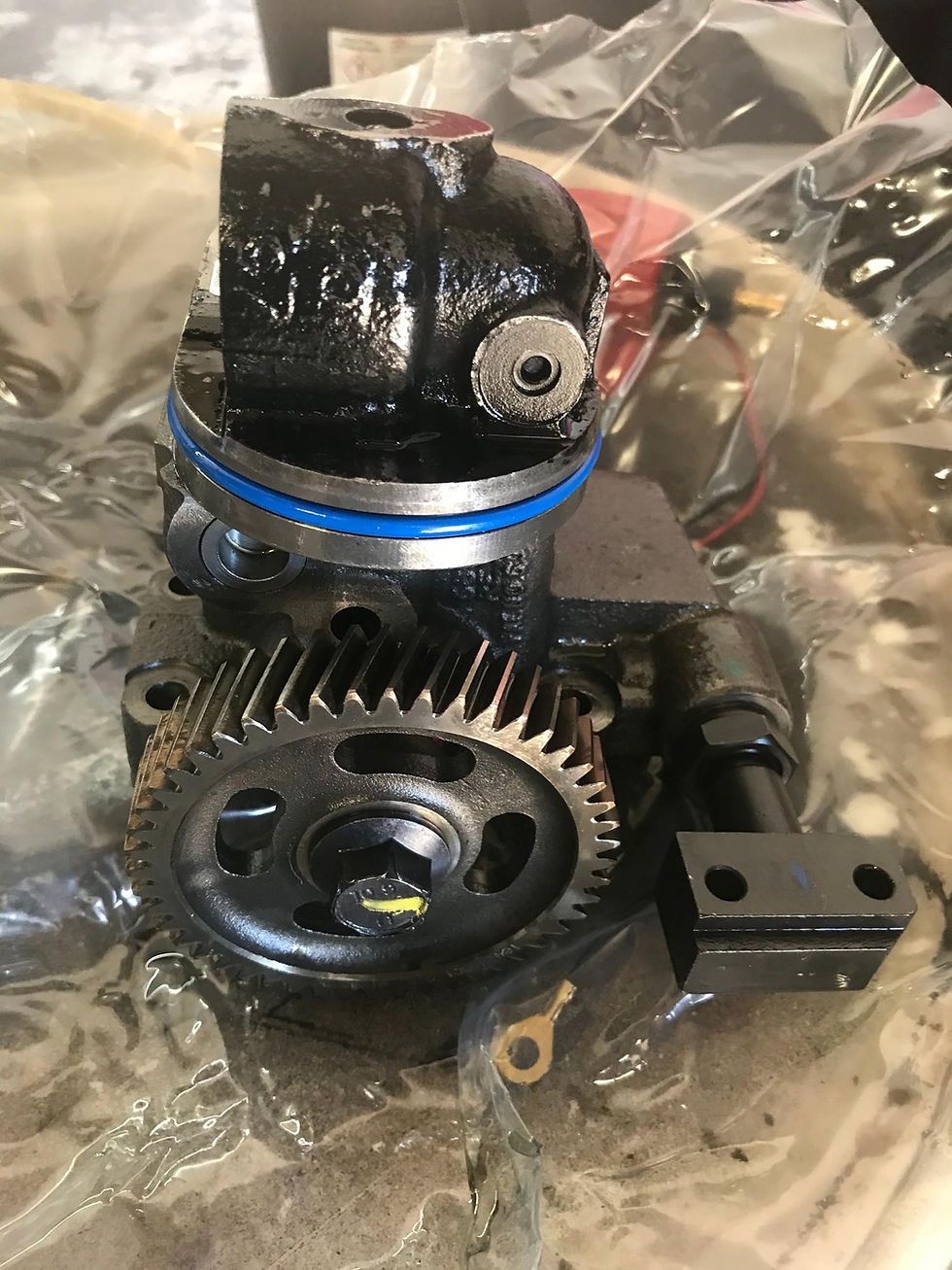
  • High-Pressure Oil System (HPOP) 

  • EGR cooler failures 

  • Oil cooler clogging

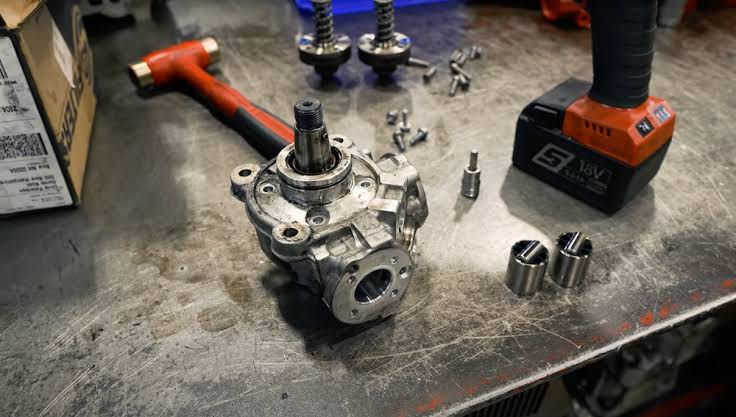
  • CP4 fuel pump failure 

  • Turbocharger / VGT actuators 

  • DPF and DEF system faults 

  • Fuel injector failure 

  • Radiator and degas bottle leaks 

  • TorqShift transmission issues

Ford Power Stroke
Repair & Service in Colorado Springs

At Westco Automotive & Truck, we specialize in Ford Power Stroke diesel engine repair and diagnostics for all Super Duty models including F-250, F-350, F-450, and F-550.


Whether you drive a 7.3L, 6.0L, 6.4L, or 6.7L Power Stroke, our technicians have the factory-level diagnostic tools and expertise to pinpoint and fix the problem — without the dealership price tag.


From high-pressure oil system leaks and EGR cooler failures to turbocharger issues and CP4 fuel pump problems, we service every Power Stroke engine with precision and transparency.


We diagnose the root cause, not just the symptom, so you get lasting repairs you can count on.


As a family-owned shop in Colorado Springs, we treat every Power Stroke truck like it's our own — because we know you depend on it.

What are the first signs my Ford 6.0L Power Stroke is failing — and what bulletproofing actually works?

The 6.0L Power Stroke has a bad reputation for a reason. Ford used this engine from 2003-2007 in F-250, F-350, and Excursion diesels. When it runs, it is powerful. When it fails, it fails catastrophically. In Colorado Springs, we see more failed 6.0Ls than any other diesel engine — mostly because owners ignore the early warning signs.


Three early warning signs you cannot ignore:


1. Coolant puking from the degas bottle – White or pink crust around your coolant reservoir cap means your EGR cooler is failing. That cooler leaks exhaust into your coolant, overpressurizes the system, and blows coolant out. Ignore this and the next failure is head gaskets.


2. Hard hot start – Your truck starts fine cold but cranks forever when warm. That is high-pressure oil leaking past bad injector O-rings or a failing HPOP (high-pressure oil pump). The 6.0L uses oil to fire injectors — low oil pressure means no start.


3. Stiction on cold mornings – Below 40°F, your truck runs rough, misses, or smokes white for the first minute. That is "stiction" — sticky injector spool valves. It will get worse every winter until injectors fail completely.


What "bulletproofing" actually means (not a marketing gimmick):

Real bulletproofing addresses the six weak points Ford never fixed:

  • EGR cooler delete or upgrade – Stock coolers fail every 60k-80k miles. We install a bulletproof diesel EGR cooler with a cast housing that does not crack.

  • Oil cooler replacement – A clogged oil cooler kills the EGR cooler. We replace it with an upgraded unit and flush the system properly.

  • Head studs (not factory TTY bolts) – ARP head studs clamp the heads at 2x the force of factory torque-to-yield bolts. Required if you want more than 40 psi of boost or plan to keep the truck past 200k miles.

  • FICM repair or upgrade – The Fuel Injection Control Module fails from heat. We relocate or rebuild it with upgraded solder joints and capacitors.

  • Blue spring upgrade – Increases fuel pressure from 45 to 65 psi. Prevents injector starvation and failure.

  • Coolant filtration kit – Catches casting sand left in the block from the factory. That sand destroys oil coolers.

What bulletproofing costs in Colorado Springs:

  • Minimum (EGR cooler + oil cooler + FICM): $3,500–$5,000

  • Full (add head studs + gaskets): $7,000–$9,500

  • Complete (all six + injectors + HPOP): $12,000–$15,000

Is it worth it?

A properly bulletproofed 6.0L with head studs and upgraded coolers will run 300,000+ miles reliably. Without it, you will spend that same money on tow bills and patchwork repairs over two years. We tell customers: either spend the money now on bulletproofing or sell the truck and buy a 6.7L or Duramax. Driving a stock 6.0L past 150k miles is gambling.


Colorado Springs note: Our altitude kills 6.0L EGR coolers faster because the engine works harder to make boost. We see EGR cooler failures at 50k miles here versus 80k miles at sea level.

The Ford 7.3L Power Stroke is called bulletproof — but what actually fails on high-mileage trucks?

The 7.3L Power Stroke is widely considered the most reliable diesel Ford ever built. It will run 300,000–500,000 miles with basic maintenance. But "bulletproof" does not mean maintenance-free. High-mileage 7.3L trucks (over 200k miles) have predictable failures. Here is what to watch for.


Failure #1: Cam Position Sensor (CPS)


The truck dies suddenly with no warning. Tachometer drops to zero while cranking. No check engine light. Then it starts again 20 minutes later. This is the infamous CPS failure.


Fix: Replace with a Ford gray or dark blue sensor (avoid cheap black sensors from Amazon). Keep a spare in your glove box. A 10mm socket and five minutes on the side of the road gets you running again.


Cost at our shop: $185–$750 including part and programming (some years need injector pulse width relearn).


Failure #2: Injector Driver Module (IDM) or Valve Cover Gaskets


Truck develops a miss under load. Runs fine at idle or light throttle. Step on it going up Monument Hill and it falls on its face. Two possible causes:

  • Valve cover gaskets – The under-valve-cover wiring harness burns at the connection pins. Replacing both gaskets with OEM harnesses fixes it.

  • IDM – The injector driver module (mounted on the driver side fender) fails from vibration and moisture. Rebuilt IDMs are $300–$500.

Cost: Valve cover gaskets $600–$1000. IDM replacement $500–$1000.


Failure #3: Oil leak at the turbo pedestal


Oil dripping from the back of the engine onto the transmission. The turbo pedestal O-rings dry out and leak. Eventually the leak gets bad enough to smoke on acceleration.


Fix: Replace pedestal O-rings and the EBPV (exhaust backpressure valve) delete while you are in there. The EBPV is unnecessary in Colorado Springs — it is for cold climates to help warm the engine faster.


Cost: $500–$1000 including a rebuild kit and EBPV delete.


Failure #4: Fuel bowl leaks

Diesel fuel pooling on top of the engine. The fuel bowl has several O-rings (drain valve, water separator, inlet/outlet lines) that harden and leak. Raw diesel smells strong inside the cab.


Fix: Full fuel bowl rebuild kit with all O-rings. Or delete the fuel bowl entirely and install a regulated return system — better for injector life anyway.


Cost: Rebuild kit $400–$1000 installed. Regulated return with bowl delete $1,200–$2,000.


The honest truth about 7.3L ownership in 2026:

These trucks are 23–32 years old now. Rubber parts (O-rings, hoses, wiring insulation) are failing from age, not miles. Expect to replace every rubber seal and vacuum line if you want reliability. A clean, rust-free 7.3L with documented maintenance is worth $15,000–$25,000 today. One that has been neglected is a money pit.


Colorado Springs specific: These trucks hate our cold starts below 20°F. The factory glow plug relay fails. Upgrade to a Stancor or White-Rodgers relay ($50–$80) and use 5W-40 synthetic diesel oil in winter. And plug in your block heater below 10°F.


Our recommendation: If you buy a 7.3L, budget $3,000–$5,000 in catch-up maintenance (sensors, O-rings, injector o'rings, glow plugs, harnesses). Then drive it another 200k miles.

Why does everyone say the Ford 6.4L Power Stroke is the one to avoid — and is there any way to make it reliable?

The 6.4L Power Stroke has a well-deserved bad reputation. Ford used it for only three years (2008-2010) in F-250, F-350, and F-450 trucks. It makes great power — 350 HP and 650 lb-ft stock. It also has seven major failure points. We do not recommend buying a 6.4L unless you get it for almost nothing and have a spare $10,000 for repairs.


The failures (in order of how they kill the engine):


1. Rocker arm and lifter failure (most common)

The 6.4L uses hydraulic lifters and rocker arms that fail without warning. Symptoms: sudden tapping noise from the valve cover, then a dead cylinder. The lifter collapses, the rocker arm comes off, and the valve stops opening. If you keep driving, the pushrod bends and sends metal through the engine.


Fix: Replace all lifters, rocker arms, and pushrods on the affected bank — $3,000–$5,000. But the other bank fails within 20k miles.


2. Radiator and degas bottle failure


The plastic radiators crack at the upper hose fitting. The degas bottle (coolant reservoir) cracks at the seam. Coolant dumps suddenly. Engine overheats. Head gaskets fail. Most customers do not catch it in time.


Prevention: Replace the radiator with an all-aluminum unit ($800–$1,200) and an upgraded degas bottle ($200–$300) before they fail.


3. High-pressure fuel pump (HPFP) failure


The Bosch CP4 pump (same one that fails in 6.7L Power Strokes and many Duramaxes) eats itself and sends metal shrapnel through every fuel injector. The entire fuel system needs replacement — $8,000–$12,000.


Symptoms: Hard start, long crank, then no start. Check your fuel filters for metal flakes.


4. EGR cooler and DPF failures

The EGR coolers crack and fill the DPF with coolant. The DPF clogs and regenerates constantly. Cleaning or replacing the DPF costs $2,000–$3,500. Deleting the EGR and DPF is illegal for on-road use (EPA fines up to $10,000 for shops). Most shops including us will not do delete work anymore.


5. Turbocharger failure

The compound turbo setup (small turbo feeding a large turbo) has complex unison rings and actuators that stick. Symptoms: low boost, black smoke, no power above 2,500 RPM. A turbo rebuild or replacement runs $2,500–$4,500.


Is there any way to make a 6.4L reliable?

Honestly? No. The engine has fatal design flaws. A few owners have thrown $15,000–$20,000 at them — full studded head gaskets, deleted emissions, upgraded lifters, aluminum radiator, disaster prevention kit for the CP4 pump. Those trucks run. But you could have bought a used 6.7L for that money.


Our advice: Do not buy a 6.4L. If you already own one, drive it until the CP4 pump fails or the lifters collapse. Then part it out. The transmission (5R110 TorqShift) and transfer case are excellent — sell those. The body and frame are valuable. The engine is not worth saving.


Colorado Springs note: The 6.4L runs hot even at sea level. At 6,000 feet with thinner air, it runs hotter. Towing a trailer up I-70 in summer guarantees EGTs over 1,300°F. You will need gauges (EGT, boost, fuel pressure) to avoid melting pistons.

The Ford 6.7L Power Stroke is Ford's best modern diesel — but what fails at 150k+ miles?"

The 6.7L Power Stroke (2011 to present) is genuinely good. Ford designed this engine in-house after the 6.0L and 6.4L disasters. It makes 400–500 HP and 800–1,200 lb-ft depending on the year. With proper maintenance, it will run 300,000–400,000 miles. But high-mileage trucks have specific problems.


Failure #1: CP4 fuel pump (2011-2014, some 2015-2016)

The Bosch CP4 high-pressure fuel pump is the same one that fails in GM and Ram diesels. It has a roller-and-cam design that wears out. When it fails, it sends metal shavings through the entire fuel system — injectors, rails, lines, tank.


Symptoms (catch it early):

  • Long crank time (more than 3-4 seconds)

  • Metal flakes in your fuel filter water separator

  • Intermittent loss of power

Prevention (critical for 2011-2016 owners):


Install a Disaster Prevention Kit (DPK) – $800–$1,200. This kit redirects the CP4 outlet to a secondary filter and blocks metal from reaching the injectors. When the CP4 fails, you replace the pump and flush the return line — not the $10,000 fuel system.

If the CP4 already failed: Expect a $10,000–$14,000 repair bill for a complete fuel system (new CP4, all 8 injectors, fuel rails, lines, tank flush, lift pump).


Failure #2: Upper oil pan leak (2011-2014)

Oil dripping from the back of the engine bellhousing. The upper oil pan is sealed with silicone from the factory. Over time, it leaks. This is a cab-off repair — meaning we have to lift the entire cab off the frame to access the leak.


Cost: $2,500–$6,000. Most of that is labor (15–20 hours). Many owners live with the leak, adding a quart between oil changes.


Failure #3: EGR cooler failure (2011-2016)

The EGR cooler cracks and leaks coolant into the exhaust. Symptoms: white smoke, sweet smell, loss of coolant with no external leak. The fix is an upgraded EGR cooler ($1,200–$2,800) plus labor ($1,500–$4,500).


Failure #4: Turbocharger unison ring (2011-2014, 2017+ VGT turbos)

The variable geometry turbo has a unison ring that sticks. Symptoms: overboost (40+ psi), underboost (below 20 psi), turbo surge, check engine light with P0045, P0046, P132B codes.


Fix: Turbo rebuild ($1,500–$5,500) or replacement ($3,000–$6,500). Some years can be cleaned without removal ($400–$1,000).


Failure #5: Transmission (6R140 or 10R140)


The 6R140 (2011-2016) is very reliable. The 10R140 (2020+) is mostly reliable but has the same CDF drum bushing issue as the gas 10R80 (see FAQ 5). Symptoms include harsh shifts and flaring between gears.


Maintenance schedule for 6.7L longevity:

Mileage

Service

5,000

Oil change (Motorcraft 5W-40 full synthetic) and fuel filters

10,000

Rotate tires, inspect brakes

30,000

Coolant flush (Motorcraft orange or yellow, not green)

50,000

Transmission fluid and filter (6R140) or first service (10R140)

100,000

Front and rear differential fluid, transfer case fluid, brake fluid flush

150,000

CP4 Disaster Prevention Kit (if not already done) and EGR cooler inspection


Colorado Springs specific: The 6.7L handles altitude well — better than any previous Power Stroke. But the CP4 pump fails faster at high altitude because fuel lubricity decreases with thinner air. Install the DPK before 100k miles if you live above 5,000 feet.


Which 6.7L years are best?

  • 2015-2016: CP4 still a risk, but better turbo and updated valve train. Install DPK immediately.

  • 2017-2019: Updated CP4.2 pump (slightly better), aluminum oil pan (no leaks), 450 HP / 935 lb-ft. Sweet spot for used trucks.

  • 2020-2022: 475 HP / 1,050 lb-ft. 10R140 transmission. Great trucks but early 10R140 had CDF drum issues.

  • 2023+: 500 HP / 1,200 lb-ft. High-output option. Too new to have common failures yet.

Our recommendation: Buy a 2017-2019 6.7L with under 150k miles. Install a CP4 disaster prevention kit immediately. Change oil and fuel filters every 5,000 miles. That truck will outlast your loan.

close up 6.0.jpg

Why Choose Westco Automotive & Truck for Ford Power Stroke Service in Colorado Springs?

Diesel-Specific Diagnostic Tools 

We use factory-level Ford IDS and J2534 pass-thru programming to read Power Stroke-specific fault codes and perform advanced diesel diagnostics


Experienced Diesel Technicians 

Years of hands-on Ford Power Stroke repair experience on 7.3L, 6.0L, 6.4L, and 6.7L engines


No Dealership Markup 

Quality work at independent shop rates without the Ford dealer price tag


Free Diagnostic Scans

 We don't charge to check your Power Stroke before recommending repairs


24-Month / 24,000-Mile Warranty — We stand behind our work on every repair


    Female Led / Family-Owned & Trusted 

Hundreds of positive reviews

                           from Colorado Springs diesel truck owners Colorado Springs diesel truck owners

Get in Touch

1130 Valley Street A/B

Colorado Springs, CO 80915

  • Facebook
  • Instagram

Have a Power Stroke question? We can help!

Thanks for submitting!

bottom of page