


BMW Service and Maintenance
The Ultimate Driving Machine
Since 1975, BMW has brought "The Ultimate Driving Machine" to American roads, combining luxury with sporty performance and rear-wheel drive dynamics that enthusiasts love.
OUR EXPERIENCE WITH BMW
At Westco Automotive, we've earned our stripes with BMW owners who demand precision and expertise. Our technicians have diagnosed and repaired countless VANOS and Valvetronic systems, replaced more oil filter housing gaskets than we can count, and performed cooling system overhauls on everything from 3 Series to X5s.
We understand that BMW ownership comes with unique maintenance requirements, and we help our customers prioritize repairs to keep their Ultimate Driving Machines on the road without breaking the bank. From N54 turbo issues to N63 V8 complexity, we've seen it all and fixed it right.

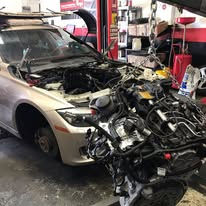


H3: N20 / N26 Timing Chain Guide Failure
.jpg)
-
Affected Models: 2012-2015 3 Series (F30), 5 Series (F10), X1, X3, Z4
-
Symptoms: Whining noise around 4,000 RPM, rattling on cold start, check engine light
-
Fix: Timing chain module replacement
-
Cost Range: $3,000-$8,500
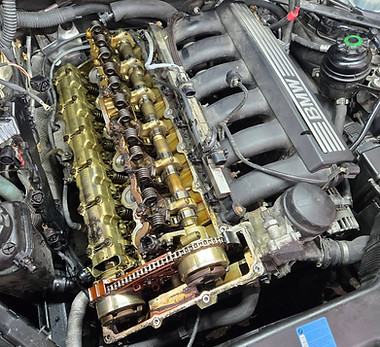
H3: N52 / N51 Oil Leaks
-
Affected Models: 2006-2011 3 Series, 5 Series, X3, X5
-
Symptoms: Burning oil smell, oil spots on driveway, low oil warnings
-
Common Leaks: Valve cover gasket, oil filter housing gasket, oil pan gasket
-
Fix: Gasket replacement
H3: N54 / N55 High-Pressure
Fuel Pump (HPFP) Failure

-
Affected Models: 2007-2016 335i, 535i, X5, X6
-
Symptoms: Long crank times, reduced power, check engine light
-
Fix: HPFP replacement
H3: Cooling System Failures

-
Affected Models: All BMW models, especially N52 and N54
-
Symptoms: Overheating, coolant leaks, low coolant warnings
-
Common Failures: Water pump, thermostat housing, expansion tank, hoses
-
Fix: Component replacement
VANOS System Faults

-
Affected Models: All BMW models with VANOS
-
Symptoms: Reduced power, rough idle, check engine light, rattle on startup
-
Fix: Solenoid replacement or camshaft adjuster unit replacement
Carbon Buildup (Walnut Blasting)

-
Affected Models: Direct-injection BMW engines (N20, N26, B-series)
-
Symptoms: Rough idle, reduced fuel economy, hesitation, misfires
-
Fix: Walnut blasting carbon cleaning — recommended every 60,000-80,000 miles
Some common repairs for BMW vehicles:
-
Oil filter housing gasket replacement
-
Cooling system overhaul (water pump, thermostat, expansion tank)
-
Control arm and thrust arm bushing replacement
-
Battery registration and programming
Some known Issues by model:
BMW 3 Series (E90, 2006-2011):
Water pump failures, turbo wastegate rattle (335i), electrical issues, valve cover gasket leaks.
BMW X5 (E70, 2007-2013):
Transfer case failures, air suspension compressor failure, valve stem seal leaks, mechatronic sleeve leaks.
BMW 5 Series (F10, 2010-2017):
Timing chain guide failure (N20 engine), turbo failures, oil leaks, air suspension issues.
BMW 7 Series (F01, 2008-2015):
Air suspension failures, electrical gremlins, transmission issues, injector failure (V8/V12).
BMW 3 Series (F30, 2012-2018):
Timing chain issues (N20), turbo failures, coolant leaks, rear main seal failure.
I've heard about a major timing chain issue with some BMW engines. Which models are affected and what should I do?
This is a critical question for owners of BMW models with the N20 or N26 4-cylinder engines, typically found in the 2012-2015 3 Series (F30), 5 Series (F10), X1, X3, and Z4. The timing chain guides in these early engines were made of a plastic material that can become brittle and disintegrate over time . If the chain fails, it can cause catastrophic engine damage.
Key Symptoms to Watch For: A loud whining noise from the engine, especially around 4,000 RPM, rattling on start-up, or a check engine light with specific fault codes . If you own one of these models and haven't had the timing chain module replaced, we recommend a proactive inspection. It's a significant repair , but far less than a full engine replacement if the chain fails .
We can perform the diagnostics to check the health of your chain.
I keep hearing about a BMW recall for a fire risk. Is my car affected?
Yes, BMW recently announced a global recall for a potential fire hazard. The issue involves the wiring harness for the air conditioning or the cockpit microfilter that can be accidentally damaged during a routine cabin air filter replacement, which could lead to a short circuit and a fire risk .
This recall affects a wide range of newer models, including the:
5 Series (G60 sedan and G61 Touring)
7 Series (G70)
i5 (electric)
i7 (electric)
M5 (sedan and Touring)
The repair is straightforward and free: dealers will inspect the wiring harness and install a retaining bracket to prevent future damage . You can check if your specific vehicle is affected by entering your VIN on the NHTSA website or by calling BMW customer service.
How often does my BMW need an oil change?
While BMW's official recommendation can be up to every 15,000 miles or once a year, many specialists, including us, suggest a shorter interval of 5,000 to 7,500 miles . This is especially important for the N20 and N26 engines mentioned above. Fresh, clean oil is critical for lubricating the timing chain and other vital components, and following a more conservative schedule is one of the best ways to extend the life of your engine . We always use full synthetic oil that meets BMW's strict LL-01 specifications.
My BMW's check engine light is on. What are the common reasons?
A check engine light on a BMW can be triggered by many things. Some of the most common include:
Oil Leaks: BMWs are known for oil leaks, often from the valve cover gasket or oil filter housing gasket .
Cooling System Failures: Components like the water pump and plastic thermostat housing are common failure points, especially on higher-mileage cars .
Ignition System Issues: Worn-out spark plugs or failing ignition coils are a frequent cause of misfires .
VANOS System Faults: The VANOS system (BMW's variable valve timing) can develop issues, which often show up as fault codes and performance problems .
Our factory-level diagnostic tools allow us to read BMW's specific fault codes to pinpoint the exact issue without guesswork.
Why is my BMW vibrating at highway speeds or when braking?
A vibration, especially when braking at speeds over 50 mph, is very often caused by worn front suspension components. The control arm bushings on BMWs are known to wear out, which can allow the steering wheel to shimmy . Other potential causes include:
Worn Ball Joints: Similar to bushings, these can wear and affect handling.
Worn Brake Rotors: An uneven surface on the brake rotor can cause a pulsation felt in the brake pedal.
Wheel Balance Issues: An out-of-balance tire can cause a vibration felt through the steering wheel.
A thorough inspection of the suspension and steering components is the best way to get to the root of the problem.
What does it mean when I see a "Drivetrain Malfunction" warning?
This is a common warning on modern BMWs that can be alarming. The message means the engine control unit has detected an issue that affects performance and has entered a "limp mode" to protect the engine. The cause can be a wide range of things, from a simple sensor failure or a misfire to a more serious issue with the fuel system or turbocharger . You should have the car diagnosed as soon as possible to prevent any further damage.
What is a "carbon cleaning" service, and does my BMW need it?
Direct-injection BMW engines (common in the N20, N26, and the newer B-series engines) do not have fuel washing over the intake valves. This can cause carbon deposits to build up on the valves over time . This can lead to:
Rough idling
Reduced fuel economy
Hesitation on acceleration
Increased risk of misfires
A "walnut blasting" carbon cleaning service physically blasts the carbon off the valves. We recommend this service around 60,000-80,000 miles to restore lost performance and efficiency.
Why is my BMW leaking oil, and is it a serious problem?
Oil leaks are a common issue on BMWs, especially as they age. The most frequent culprits are:
Valve Cover Gasket: This gasket seals the top of the engine. When it fails, oil can leak onto the exhaust manifold, causing a burning smell.
Oil Filter Housing Gasket: This gasket seals the oil filter housing to the engine block. Leaks here can be serious, as oil can drip onto the serpentine belt, causing it to slip or break.
Oil Pan Gasket: The gasket at the bottom of the engine can also leak, though this is a more labor-intensive repair.
While a small seep might not be urgent, we recommend addressing oil leaks promptly. A significant leak can lead to low oil levels, engine damage, and in the case of the oil filter housing, a failed belt that could be pulled into the engine.
How often should I replace my BMW's brake fluid?
BMW recommends replacing the brake fluid every 2 years, regardless of mileage. Brake fluid is hygroscopic, meaning it absorbs moisture from the air over time. This moisture can corrode the internal brake components (like the calipers and ABS pump) and lower the fluid's boiling point. If the fluid boils, you can experience brake fade or failure. We use a specialized flushing machine to remove all the old fluid and replace it with fresh, high-performance brake fluid.
What is the BMW VANOS system, and why does it fail?
VANOS is BMW's variable valve timing system, which adjusts the timing of the intake and exhaust valves to optimize performance, fuel economy, and emissions. It uses oil pressure to operate. Common failure points include:
Leaking Solenoid Seals: The solenoids that control oil flow can leak, causing hesitation or poor performance.
Failed VANOS Camshaft Adjuster Units: The internal mechanical units can wear out, leading to a rattle on startup or a loss of low-end power.
Worn Timing Chain Guides: As mentioned in question one, these can contribute to VANOS issues.
Symptoms of a failing VANOS system include a check engine light, reduced power, rough idling, and a rattling noise from the engine. Our diagnostic tools can test the system to accurately determine the repair needed.